




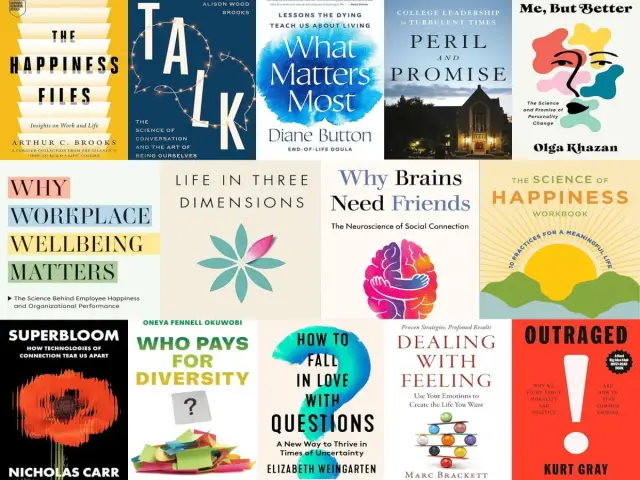
The year 2025 hasn’t started out great. We’ve seen foreign wars, climate change, racist rhetoric, and political polarization escalate over the last several months, making many of us angry, burned out, and depressed.
But even when things seem inescapable or hard, it can be helpful to remember that we have personal agency in how we respond. Whether it’s managing our emotions better, improving our relationships, stretching ourselves in new directions, or envisioning a better future for all, we fare better when we don’t give into despair and take constructive, positive action. The science suggests taking care of ourselves can allow us to better face our collective challenges.
We hope this year’s selection of books will inspire you as they have us to become the change you want to see in the world.
Celadon Books, 2025, 320 pages. Read our Q&As with Marc Brackett about adults and children.
X
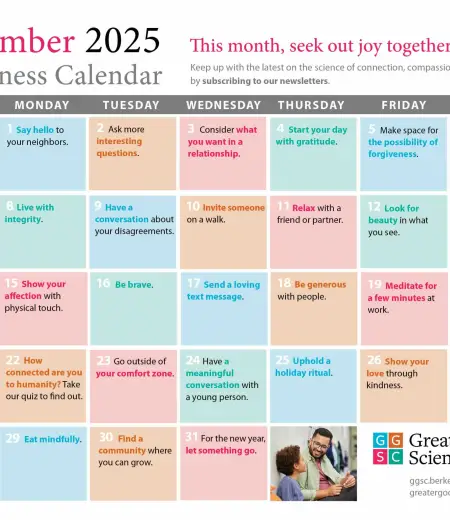
What is your relationship with your emotions on a daily basis?
Some of us might deny that we’re influenced by our feelings at all. Others might try to leave our emotions behind when we move into certain environments, like work or school. We may believe that particular emotions are “bad” or “negative”—and so aim to avoid them as much as possible.
But emotions are around whether we like them to be or not, explains Marc Brackett, founding director of the Yale Center for Emotional intelligence, in his new book, Dealing with Feeling. Our skill in dealing with them will influence how much success and well-being we can attain.
His book explains how we can work with our emotions so they don’t get in the way of us achieving our goals or living the life we want. This involves working with our beliefs about emotions, the emotions themselves, how they show up in our bodies, and the thoughts that come with them—and reaching out to others for support.
Emotion regulation is a skill that we should start learning in childhood, Brackett argues, but many of us must revisit it as adults because no one really showed or taught us how to practice it.

HarperOne, 2025, 320 pages. Read our Q&A with Elizabeth Weingarten.
At the start of her new book, How to Fall in Love with Questions, behavioral psychologist Elizabeth Weingarten rejects the now-conventional wisdom that everyone should “embrace uncertainty.” While that approach might help some people in many circumstances, Weingarten suggests that humans “are programmed to try to dispel doubt and uncertainty”—and so telling people to do the opposite can actually lead to more anxiety, rumination, and paralysis.
Her alternative? To embrace not the uncertainty but rather the questions we confront throughout our lives. Her inspiration is the poet Rainer Maria Rilke, who in his 1929 book Letters to a Young Poet urges his interlocutor Franz Kappus “to have patience about everything that is still unresolved in your heart; try to love the questions themselves, liked locked rooms, like books written in a truly foreign language.”
Some questions can be answered easily, but some take a longer time—and some must be continually asked. The key is to construct the right questions and understand their place in your life.
For example, Weingarten describes starting out by wrestling with the question of whether she should stay in her relationship. And at a certain point, she realized that “Should I get a divorce?” was simply too binary. A good question needs to break out of binaries, and so she pivots to “What would have to change in order for us to stay together?” This question allowed her to have the right conversations with her husband, and so they were able to answer it together.
Weingarten calls this way of life “a method of truth-seeking” that is “characterized by patience and openness to new ideas.” Through a combination of scientific research and journalistic profiles of people who exemplify these qualities, Weingarten walks her readers through the many ways we can construct good questions and then carry them as we navigate ourselves and the world around us.

Doubleday, 2025, 256 pages. Read our Q&A with Shigehiro Oishi.
Many of us think happiness or meaning are the keys to a good life. But, in Shigehiro Oishi’s book Life in Three Dimensions, we learn about a third path: “psychological richness”—something that comes with seeking novel, complex, challenging experiences that alter your perspective.
“Psychological richness is really capturing change rather than stability, newness rather than familiarity,” says Oishi. “In that sense . . . it’s quite distinct from happiness and meaning.”
His research finds that people seeking psychologically rich experiences are more curious, knowledgeable, and wise. They’re also more apt to connect across differences, willing to move out of their comfort zone to explore and innovate.
His book tells stories of people like Oliver Sacks and Steve Jobs who famously lived psychologically rich lives. He also features everyday people who’ve pursued novelty and personal challenge, showing how they benefitted from stretching themselves in new ways.
Anyone can seek psychological richness, says Oishi, whether that’s trying out a new cuisine, deepening conversations, or learning a new language. Even those with happy, meaningful lives could experiment with adding more richness to help fill whatever may be missing from their lives.
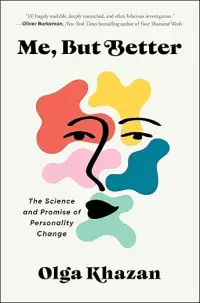
S&S/Simon Element, 2025, 288 pages. Read a review of Me, But Better.
Our personalities may seem fixed and unchanging. But, as Olga Khazan writes in Me but Better, research and personal experience suggest otherwise. Your personality can change and often does, through aging, experience, or deliberate effort (like therapy). That means you can become a different version of yourself.
Why change one’s personality? For Khazan, it was about being happier and healthier, while taking on new challenges in life. A self-proclaimed introvert and neurotic, she was sobered by research suggesting introversion makes you less happy, while neuroticism (a tendency toward worrying and emotional instability) puts you at greater risk for anxiety, depression, substance abuse, and dementia. Her desire to change led her to experiment with a “fake it ‘til you make it” approach, leaning into experiences aimed at increasing extraversion and decreasing neuroticism.
While we may not share Khazan’s goals, her book still offers a provocative, entertaining primer on the research behind personality change, as well as a wealth of tools for nudging yourself in different ways. Following her lead might not bring you a whole new personality, but even small changes could make a difference.
“A new and slightly improved personality, I learned, can make you happier, more successful, and more fulfilled,” writes Khazan. “It can help you enjoy your life, rather than just endure it.”
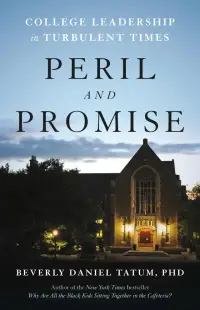
Basic Books, 2025, 384 pages
American colleges are in crisis. Campus protests, financial worries, and White House demands are pressuring higher education leaders like never before.
Peril and Promise speaks to these pressures. A psychologist by training, Beverly Daniel Tatum has worn many hats in higher education, from professor to trustee to interim president of Mount Holyoke College and president emeritus at Spelman College—a broad perspective that makes her uniquely poised to tackle the issues colleges are facing.
In 2012, for example, Spelman faced a dilemma—its NCAA program was draining resources, and the facilities were floundering. In response, Tatum launched a wellness initiative, replacing costly NCAA athletics with a campus-wide health and fitness program, boosting fitness class participation from 278 to over 1,300 students.
It’s this out-of-the-box thinking that reveals Tatum’s original thinking and care for the students under her wing. Her vision for higher education—prioritizing holistic health, equity, and belonging—is what our leaders need, moving forward.

Pantheon, 2025, 368 pages. Read our Q&A with Kurt Gray.
Many of us are outraged today. We dig in our heels on abortion, vaccines, immigration, or gender—convinced we are morally right and the other side is dangerously wrong. We talk past each other, certain we’re protecting what matters most. And the other side feels exactly the same.
In Outraged: Why We Fight About Morality and Politics and How to Find Common Ground, psychologist Kurt Gray argues that our outrage doesn’t stem from fundamentally opposing values, but from a shared moral instinct: the drive to prevent harm.
Drawing on two decades of research and his work leading the Deepest Beliefs Lab at UNC Chapel Hill, Gray shows that beneath every heated debate lies the same question: Who is being harmed? We aren’t divided because we disagree about morality’s essence; we’re divided because we disagree about who the victim is.
Gray challenges the idea that liberals and conservatives rely on different moral foundations. Instead, he argues that our “harm-based” moral minds—shaped over millennia of threat detection—interpret modern dangers differently. These competing perceptions fuel today’s polarized outrage.
Still, Outraged is ultimately hopeful. Gray offers tools like sharing personal harm stories and his C-I-V method (connect, invite, validate) to bridge divides.

W. W. Norton & Company, 2025, 272 pages. Read our Q&A with Nicholas Carr.
Many psychologists have sounded the alarm over social media and its damaging effects on our relationships and Mental health. As Nicholas Carr chronicles in Superbloom, this is not some new phenomenon, but part of a historic trend. Many past improvements in communications technologies, like social media, have not lived up to their hype of creating a more connected world.
That’s because increased ease of communication is not necessarily better, he writes. For example, the personal information dumps we get from social media posts tend to make us like people less, not more. People tend to be less filtered when chatting online than in person, too, so that conversations can quickly become toxic and divisive.
Why do we engage anyway? We’re wired to seek out new information and confirm our place in the social hierarchy, says Carr, and these instincts are easily exploited by media companies.
“The algorithms read what triggers our attention, what grabs our attention, and, by proxy, seems to be what we desire, and then give us a lot of it,” says Carr.
By explaining how we’re being duped to tune in, Carr hopes to inspire people to use social media more wisely, prioritize in-person interactions, and exert more agency over how technology is regulated.

Crown, 2025, 336 pages. Read a review of Talk.
As humans, we’re talking to each other constantly. With all that practice, we must be pretty good at it—right?
Not exactly. As a professor at Harvard Business School, Alison Wood Brooks teaches people how to have better conversations. In Talk: The Science of Conversation and the Art of Being Ourselves, she debunks many of the widespread myths and assumptions that cause us to have less-than-stellar interactions. It turns out that many of our intuitions about how to talk to each other are off the mark, creating awkwardness, misunderstandings, and missed opportunities for connection.
For example, it helps to prepare conversation topics in advance, even if we resist doing so, and people are more open to talking about deep or “negative” topics than we think. Switching topics frequently tends to make conversations better, and it’s highly unlikely you’ll ever ask too many questions. Almost no conversation will end when you or the other person wants it to—and that’s OK.
As Brooks explains, conversation is a skill, and research findings can help us become better at it so our conversations are more enjoyable, more productive, and better at bringing us closer together.
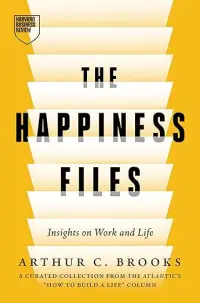
Harvard Business Review Press, 2025, 272 pages. Read our Q&A with Arthur C. Brooks.
In his popular Atlantic magazine column, “How to Build a Life,” Harvard professor Arthur C. Brooks has explored the habits that help us cultivate greater meaning, contentment, and well-being.
His new book gathers 33 of those short essays, each one with a simple message. In one on “treating your life like a startup,” for example, Brooks shares how the great entrepreneurs develop clarity, create intentional design, and have the courage to pivot, all of which are important skills to apply to your own life.
In another, Brooks encourages us to consider starting with “no” as the default, reflecting on how saying “yes” might affect your own happiness (and your need for rest, focus, and meaning), and then making a conscious decision about the request.
A major theme in the book is that we think happiness will come from status or achievements when, in reality, more lasting happiness comes from paying attention to relational matters like love, friendships, and community. The important thing is to take small steps.
As Brooks relates, “Humans get satisfaction not from arriving at a destination but rather from making tangible progress toward it…no matter what we call it, the key skill is to understand that the returns on life come from the strength of your intimate ties.”
Most of us probably don’t want to think about the inevitability of dying. But there are important lessons to learn from facing our mortality, argues end-of-life doula Diane Button in What Matters Most.
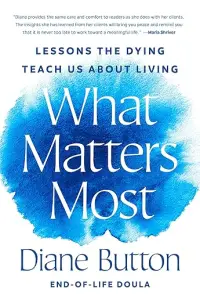
The Open Field, 2025, 252 pages. Read our Q&A with.
The book is full of moving stories in which Button helps people manage the practical, emotional, and spiritual aspects of dying. By shepherding them through the process, she’s witnessed firsthand what people facing death care about most and what brings them peace and joy.
“When people are facing the end of life, everything that is superficial just gets stripped away,” she says. “You’re really focusing on love, relationship, healing, and, oftentimes, spirituality.”
She’s also seen many people needing to attend to unfinished business, like reconnecting with estranged loved ones, forgiving others, or preparing a legacy to leave behind. By revealing what people need when facing death, Button provides life lessons for us all.
“Talking about death is talking about life,” she says. “If you start to understand what, for you, is most important and what might be most meaningful for you at the end of life, then you can live differently now.”
To prepare for the writing of Who Pays for Diversity?, University of Cincinnati sociologist Oneya Fennell Okuwobi interviewed employees of color in churches, universities, and corporations.
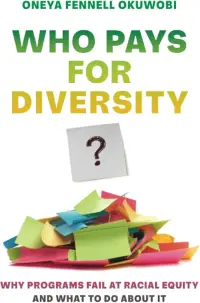
University of California Press, 2025, 265 pages
She found something troubling. These employees were bearing hidden psychological and professional costs from becoming tokens and commodities in organizations that were pursuing diversity, as many organizations do, for image, legitimacy, or financial gain. Time and again, she found, these employees are asked to serve on extra committees, run diversity programs, and represent the organization in other ways. One Black wealth manager was pulled into so many client meetings that were unrelated to his job, just so the company could “look diverse.” As a result, his performance metrics suffered greatly.
Today, there is no dearth of critiques on the subject of diversity, equity, and inclusion (DEI), and that’s probably a good thing. It turns out that it’s really hard to undo centuries of oppression, especially when Americans don’t see eye to eye on these issues. Okuwobi argues for replacing performative diversity with structural change and shared responsibility for equity—and helps all of us consider what a better workplace could look like.
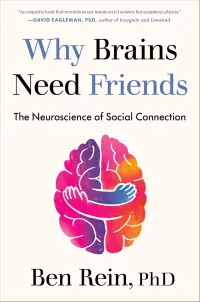
Avery, 2025 256 pages. Read a review of Why Brains Need Friends.
Having warm, close relationships is key to our physical and Mental health. Why?
According to Ben Rein’s Why Brains Need Friends, our brains releases neurochemicals like oxytocin, serotonin, and dopamine whenever we’re with people we love. The release of oxytocin alone has been tied to reducing stress, anxiety, and inflammation, and healing from wounds, making the health connections clear. But all three chemicals work in tandem to make sure we feel rewarded for and seek out warm relationships.
Other biological systems come into play, too. For example, we unconsciously mimic the expressions of other people we’re with, helping us to understand their feelings and have empathy. This doesn’t happen as easily online, which explains why it’s easier to make a close connection in person.
Our brains can also hinder our desire to reach out to strangers by underestimating how enjoyable it might be or overestimating the possibility of rejection. By understanding our strengths and limitations, we can learn to nurture the warm relationships we all need.
“The human brain has been shaped through evolution to reward us for connection and punish us for isolation,” he writes. “As such, we have so much to gain from socializing, and arguably even more to lose without it.”
You’ve probably heard the phrase, “It’s called work for a reason,” right? It suggests work is supposed to be hard and torturous, so don’t expect more.
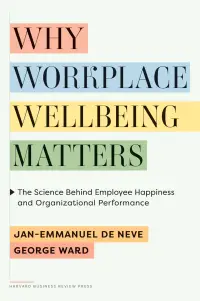
Harvard Business Review Press, 2025, 304 pages
In Why Workplace Wellbeing Matters, economists Jan-Emmanuel de Neve and George Ward show why that view is so wrongheaded. By using rigorous research findings to make their case, they argue that investing in policies that support workforce well-being also creates competitive advantages for companies, such as talent acquisition, employee engagement, retention, innovation, and business cost savings and profitability—that is, key performance indicators or KPIs.
For their research, de Neve and Ward partnered with companies to systematically increase well-being among some employees and not others, and then examine the impact on KPIs. Consistently and across multiple studies, more well-being led to better outcomes. The authors even computed a stock market index that included the top 100 well-being scorers and documented their superior long-term performance over well-known S&P 500 and Nasdaq composites.
Employee well-being improves the bottom line, write the authors, because it heightens productivity, strengthens relationships, fosters creativity, supports health, makes recruitment easier, and improves retention. By sharing methods and strategies for increasing well-being at work, their book provides both justification for and actionable approaches to companies seeking healthier, more profitable workplaces.
BONUS: Though we didn’t include it on our favorite books list, we’d be remiss if we didn’t mention our own book that came out this year, The Science of Happiness Workbook: 10 Practices for a Meaningful Life, which offers evidence-based practices for improving your personal and relational well-being. Read an excerpt.