



Does everything feel like too much these days? Get When Life Sucks: 21 Days of Laughs and Light for free when you join the Tiny Buddha list.
“When I let go of what I am, I become what I might be.” ~Lao Tzu
For many years, I was deeply involved in spiritual communities—satsangs, meditation centers, ashrams, and groups focused on positivity, service, and personal growth. These places gave me comfort, community, and a sense of purpose. But they also shaped something inside me that I didn’t fully recognize until much later:
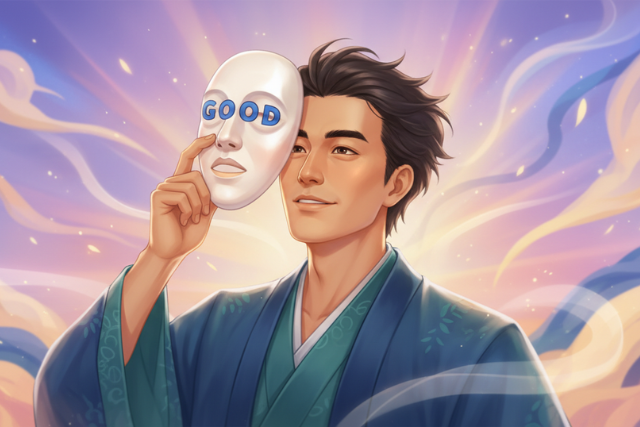
I had built my self-worth around being a “good person.”
On the surface, it sounds harmless. Who doesn’t want to be good, kind, and helpful? But looking back, I see how the pressure I put on myself—and the pressure I felt from others—slowly became a source of stress, guilt, and confusion.
And it all became clear during one unexpected moment.
The Day My Good Person Identity Broke Open
A meditation center I attended was hosting a visiting sage from India. Like many spiritual centers, volunteers (called seva, meaning “selfless service”) helped support the event. Seva is supposed to come from the heart—not obligation—just doing what you can, however much or little that may be.
But during that event, a person I considered a friend—someone who was also working for the center—became extremely upset that my wife and I weren’t volunteering as much as he thought we should.
He raised his voice. He tried to guilt us. He made me feel like I was doing something wrong simply because I didn’t meet his expectations.
I remember standing there, stunned. This was someone who meditated daily, spoke about compassion, and helped run a spiritual center—yet in that moment, he was reacting from a place of pressure, judgment, and frustration. And to be honest, so was I. I felt the urge to defend myself, explain myself, or somehow prove that I was giving enough.
That experience shook me more deeply than I expected.
It made me ask:
Why did his judgment affect me so much?
Realizing I Had My Own Good Person Identity
After reflecting on the experience, something uncomfortable came up:
I had been trying to be a “good person” for years—not for myself, but for approval.
In spiritual environments, you see a lot of people trying their best: being kind, meditating, serving, speaking positively. These are beautiful intentions. But sometimes, without realizing it, we start measuring ourselves by:
- how much we meditate
- how much we volunteer
- how positive we sound
- how spiritual others think we are
- how “selfless” we appear
And on the other side, we start admiring people who seem to do more:
- more seva
- more retreats
- more hours of meditation
- more spiritual experiences
Slowly, subtly, a kind of spiritual scoreboard forms in the mind.
And without noticing, you start to feel guilty for resting, saying no, having boundaries, and not meeting others’ expectations.
You start comparing. You start doubting yourself. You start feeling “less spiritual” if you’re not constantly giving.
And in my case, I realized I was afraid of appearing selfish or unkind if I didn’t help enough.
The truth was:
I wasn’t reacting to my friend. I was reacting to the part of me that needed to be seen as good.
How the Good Person Identity Creates Pressure
When you’re caught in the “good person” identity, you may notice:
- You say yes even when you are exhausted.
- You help others but later feel resentment.
- You feel guilty setting boundaries.
- You worry what people think if you don’t “show up enough.”
- You feel responsible for meeting everyone else’s expectations.
You might even feel afraid of disappointing others—especially in environments where goodness is emphasized.
But goodness that’s driven by guilt is not truly goodness.
It’s self-sacrifice without Self-awareness.
The Turning Point: Allowing Myself to Be Human
After that experience, I sat with an uncomfortable truth:
I was trying hard to be good so that people would approve of me.
Neither my friend nor I was a bad person. We were both acting from unexamined beliefs.
So I started asking myself:
Who am I when I’m not trying to be a good person?
Can I allow myself to be honest rather than perfect?
Can I offer help from love instead of pressure?
Can I set boundaries without guilt?
Slowly, I began letting go of the identity that said:
“Your worth depends on how much you give.”
What Letting Go Actually Looks Like
Letting go of the good person identity doesn’t mean becoming selfish or uncaring.
It means:
- Helping when your heart is open, not when you’re afraid of judgment
- Saying no without apologizing for your limits
- Allowing yourself to rest
- Allowing others to have their opinions
- Understanding that your worth is not negotiable
- Being honest rather than spiritually performing
- And the biggest one: realizing you don’t need to earn love or approval by proving your goodness
When goodness becomes natural rather than forced, it becomes deeper, more authentic, and more free.
What I Learned
That one moment at the meditation center became a doorway. It showed me that:
Spirituality isn’t measured by how much you give.
Compassion includes compassion for yourself.
True service comes from freedom, not fear.
Boundaries are acts of love, not selfishness.
Being authentic is more important than being “good.”
And most importantly:
You don’t have to be a “good person.” You just have to be a real one.

About Paul Wong
Paul Wong is the founder of Chinese Energetics™, a method he’s practiced for over fifteen years to help high-performing professionals release chronic stress and insecurities rooted in generational and early life imprints. His work supports a return to clarity, emotional stability, and grounded inner power. Paul offers live workshops, online classes, and personalized sessions. Learn more at www.chineseenergetics.com or contact him at [email protected].