



Is kindness a lost virtue in the United States? One might wonder, given the highly publicized social and political tensions we face as a nation. News reports of incivility and violence, as well as invective seen daily on our social media feeds, might make us think twice about counting on others in our communities to be kind people or to help us out in a pinch.
A new Gallup Poll conducted in the United States paints a different picture of the state of kindness. Researchers surveyed over 2,000 American adults asking them to report on their everyday experiences—how often they’d witnessed kindness or received kindness from someone else—as well as how comfortable they were to initiate kindness toward a stranger. By asking individuals about their personal experiences (as opposed to their general impressions based on the current zeitgeist), the researchers found that kindness in the U.S. is more alive and well than we might expect.
“Kindness is swirling all around us, but the perception by ordinary people is that it’s not,” says Stuart Muszynski, president and chief executive officer of the Values-in-Action Foundation and codesigner of the poll. “There’s a kindness perception gap.”
The good news about kindness
X
Muszynski and his colleagues found that a majority of Americans reported seeing kindness regularly in their everyday lives. Sixty percent said that they’d seen people acting in kind, respectful ways often or very often, while 65% said they’ve been the recipients of kind acts from someone in their community within the last seven days.
Also, 73% said that they viewed other Americans as generally very kind or somewhat kind—a figure that belies our worries to the contrary.
“What shows up in the media every day is a very unkind America,” says Muszynski. “At the grassroots level, people see kindness every day. It’s around us all the time.”
An even higher percentage of those polled, 90%, said they would be very comfortable or somewhat comfortable initiating a kind act toward a stranger—a heartwarming finding. Muszynski points out that this reflects the fact that people who witness kindness are more willing to pay it forward.
“If you see kindness, you do kindness,” says Muszynski. “It’s a natural empathy reaction.”
Experiences of kindness may vary with age
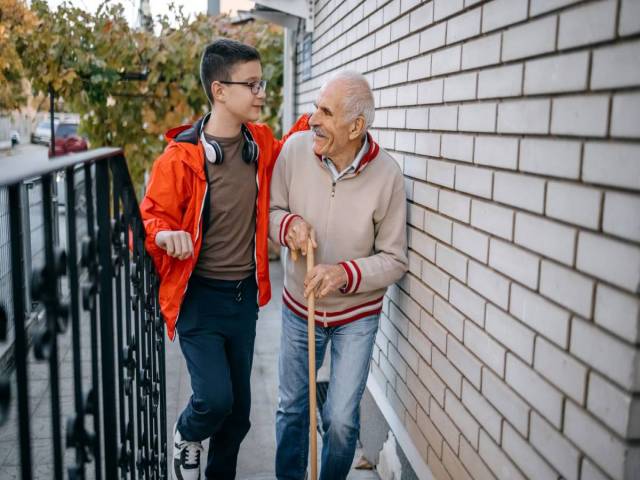
Despite the good news, Muszynski noted some nuances around the findings. For example, younger adults were less likely to witness kindness or be the recipients of kind acts, giving them a less favorable outlook on the state of kindness in our country.
Young adults also felt less comfortable than older adults offering kindness to someone they don’t know. Only 35% of 18 to 29 year olds said they were very comfortable initiating a kind act toward a stranger—significantly less than the 49% of 30 to 49 year olds and the 64% of adults 65 and older that said the same.
“An individual is much more likely to see kindness, report kindness, and do kindness, and then that drops for individuals in the 18- to 29-year-old bracket,” says Muszynski. “That was really, really surprising to us as well as to Gallup.”
Muszynski speculates that this may be due to how distressed younger generations are. He notes that this age group has lived through the 2008 recession, increased political polarization, the COVID-19 pandemic, escalating climate change, and the rise of social media culture. These all could have added to their sense of isolation or feeling the need to look out for themselves first, making it more difficult for kindness to flourish.
“If you’re growing up with an individual as well as collective perception that there’s not kindness around you, you’re not necessarily going to feel comfortable [offering] kindness,” he says.
It could also be that younger adults are generally unhappier than their elders, for developmental reasons. Studies suggest that younger adults experience less positive and more negative emotion than older adults—in part due to older people benefitting from better emotion regulation skills. A poorer mood or outlook could have an impact on their kind behavior, as happier people tend to be kinder.
A recent Pew Research poll found that younger adults report greater Mental health challenges than older adults, too, which means they will likely have less energy or emotional bandwidth to reach out to others in need.
Muszynski fears that because young people are more plugged in to the negative messages in social media, it could lead them to expect less kindness in the world. He points to research by Stanford University psychologist Jamil Zaki that found students had overly pessimistic views of how empathic and friendly other students were, based on false beliefs rather than fact. Once Zaki and his colleagues created a campaign to alert students to the fallacy of that narrative, students were much more open to engaging with one another.
“It’s really about social norms and the influence that social norms have in any kind of ecosystem,” says Muszynski.
How real is the kindness age gap?
Of course, one Gallup survey doesn’t paint the full picture on American kindness. Additional research adds context.
A recent meta-analysis pooling together findings from several studies around the world found that, overall, older adults tended to be kinder than younger adults—like the Gallup Poll. However, the difference between groups depended on the type of kindness offered. Older adults tended to be more open to sharing money or resources than younger adults; when it came to assisting someone or comforting them, the age differences were much smaller or unclear.
“What shows up in the media every day is a very unkind America. . . . At the grassroots level, people see kindness every day”
“Older adults may be more generous in some ways, but they are not necessarily more prosocial in every kind of situation,” says David Shum, coauthor of the study and a neuropsychologist at the Hong Kong Polytechnic University.
Shum and his colleagues also found that a person’s financial situation affected kind behavior. The differences in prosociality based on age were much stronger when an older person had a high level of income than when they didn’t. This suggests that a person’s socioeconomic status could play a role in kindness, too, and that the age difference effect may reflect a difference in means.
“If younger adults have fewer resources, they may appear less prosocial in some situations, even if they still care about others,” says Shum.
Complicating the picture, other research raises questions about whether age and other demographics are actual factors in kindness—and, if so, why.
For example, one study in Germany found that younger adults were actually more prosocial than older adults overall, though the type of kindness mattered, too. As people aged, their willingness to engage in genuine kindness (benevolence) or norm-based kindness (reciprocity or helping to promote fairness) decreased, perhaps because they had fewer resources. The opposite finding from the Gallup poll could be due to the study’s different time, place, and culture, as well as how kindness was measured (experimentally, in addition to self-report).
Muszynski believes economic stress could keep people from being more kind if they are focused more on survival. But economic factors couldn’t completely account for the age differences he found in the Gallup poll. While the poll did find that less educated and poorer people were more uncomfortable helping a stranger than those with more education and income, younger adults within those groups were still less comfortable reaching out to others than older people within those same groups.
We can all learn to be kinder
Regardless of the research on an actual age difference in kindness in the United States, everyone, old and young, could be nudged toward acting kinder. After all, kindness is a universal value, vital to the health of individuals as well as our nation. And it’s often contagious.
Fortunately, small, individual acts of kindness are pretty much the norm, not only in the United States but around the world. As the authors of an international study on kind behavior found, “requests for assistance are very frequent and mostly successful; and when people decline to give help, they normally give a reason.” Though cultural variations impact how this looks, kindness generally begets more kindness—just as Muszynski’s results suggest.
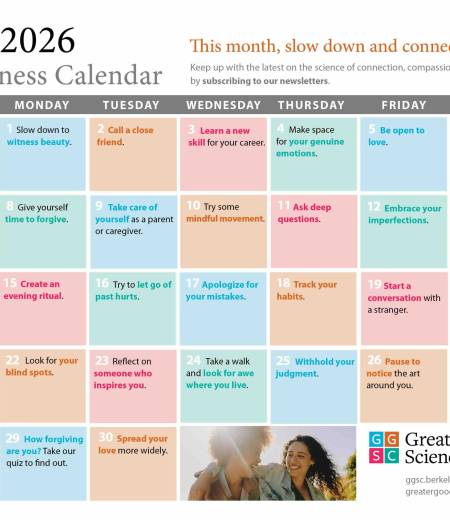
So, how to encourage more kindness to spread? It may be important to remind people that we tend to underestimate the value of our kindness toward others, thinking it won’t matter that much, when it does. Sometimes we have to just overcome our reluctance to step out of our comfort zone in order to initiate kindness toward a stranger and to see how nice it can be. For tips on how to do that in your everyday life, Greater Good offers several research-based kindness practices for any age group.
To Muszynski, part of the solution lies in making ongoing, everyday kindnesses easier to notice. Sometimes, people don’t label everyday actions as kind acts, he says; we don’t recognize that the nurse caring for us is being kind (not just doing their job) or that listening to a grieving friend is an act of kindness. He hopes to encourage more kind acts through a public kindness challenge that he and his team developed.
“I believe that the solution is to change the paradigm, change the dialogue, change the ability for people to see and understand kindness,” says Muszynski.
Wherever and whoever you are, it never hurts to practice kindness in your own life. We all have the opportunity to build a culture of kindness, making for a more perfect and compassionate union.