




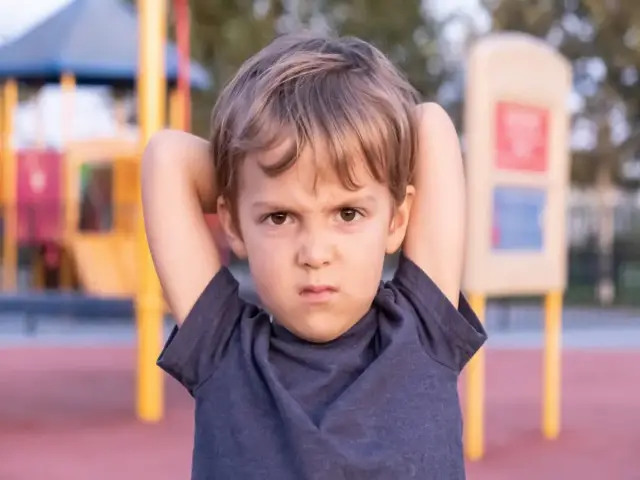
When my daughter Anjali was young, she was tiny but fierce. She would erupt over small injustices, like having to set one more plate on the table than her sister. Her small body was scarcely able to contain the outrage! Though her outbursts were rarely skillful, I could sense that her fiery righteousness was something to tend, not extinguish. With guidance, her anger could become a force for good.
At the time, I was a mindfulness educator and was adapting the Self-compassion.org/the-program/” title=””>Mindful Self-compassion course, developed by Kristin Neff and Christopher Germer, into a class for parents and children. Lessons in the Self-compassion-class/” title=””>Mindfulness and Self-compassion for Children and Caregivers course include kid-friendly messages and practices centering on anger. The program, along with the two-volume Self-compassion-workbook-for-kids/” title=””>Mindfulness and Self-compassion Workbooks for Kids that I wrote, helps children and caregivers notice anger, understand its messages, and use it as a bridge to connection rather than division.
I’ve since begun teaching Neff’s Self-compassion-kristin-neff” title=””>Fierce Self-compassion program, which helps people transform emotions like anger into courage, strength, and protection. Fierce Self-compassion invites us not only to comfort ourselves when we suffer, but also to stand up for ourselves and others in the face of harm and injustice. The energy that empowers adults to act with integrity can also help children to channel anger into clarity and caring force.
X
Through teaching mindfulness and Self-compassion programs to caregivers and youth over the years, I’ve helped thousands of kids learn how to understand and work with anger. Here are five steps that can help kids (and us) channel the power of anger wisely.
1. Help kids understand that anger is human
Many children, especially girls, are socialized to believe that it’s not OK to express anger with peers and adults outside of the home. Chronic suppression of anger can lead to negative health outcomes for all genders, though for girls and women, suppression can sometimes turn inward as self-blame or sadness.
To help children open to the emotion of anger, it can be helpful to remind them that anger is neither good nor bad, but rather evidence of being human. While there are more and less helpful ways of expressing anger (we’ll touch on that more in later sections), the emotion itself is wired into humans. Remembering that others sometimes feel like us is part of practicing Self-compassion, and this acceptance can help with emotional regulation.
Graduates of my parent-child mindfulness and Self-compassion course have shared how remembering that challenging situations and emotions are human helped them feel calmer in the presence of anger. “I noticed I didn’t get so mad like I used to get,” said one child. “You’re not alone. I notice myself sometimes saying that in my brain.” Another child blew up less frequently at a sibling by remembering that “other people also have sisters who make them mad.”
Helping kids understand that everyone gets angry is critical in developing a healthy relationship with anger.
2. Notice how anger feels in the body
To respond to anger skillfully, kids first need to notice it arising. Paying attention to how anger feels in the body helps children recognize early signs of frustration.
We can start children on this path by modeling mindfulness of anger—sometimes easier said than done! We can share our own experiences with anger, not in the heat of the moment, but at other times that invite reflection. For example, a parent might say, “I felt angry earlier today when someone cut me off in traffic. My shoulders got tight and my heart was racing, so I took a few breaths before responding. Everyone feels angry sometimes.”
Our modeling can help kids learn to accept their anger and also be mindful of their sensations. In my workbook for kids, I invite children to share about how anger feels in their body. “[When I’m angry] my face gets tight and hot,” said River, age nine. “And my breath feels suffocating.”
Aarya, age 10, shared this story: “My sister messed with my game, and my hands tightened into fists.”
It can be challenging for kids to hold anger sensations in awareness during the heat of the moment. It usually works best to practice mindfulness of anger sensations during neutral times, intentionally calling up a frustration and helping kids narrate how the body responds.
We can also help kids notice neutral sensations, like feeling the soles of their feet. Drawing awareness into the feet can help us stay grounded in the presence of strong emotions. With repeated practice, mindfulness of these sensations can help create a pause between an angry impulse and a reaction.
3. Regulate the intensity of anger
Anger is a powerful emotion, and when it surges through the body, it can overwhelm kids whose prefrontal cortex is still developing. As Khalil, age eight, puts it: “When I get angry, my whole body gets tight and I feel red. Like a bomb that could explode.”
Self-compassion Workbook for Kids volume 2″ src=”https://ggsc.s3.us-west-2.amazonaws.com/assets/images/mindfulness_and_self-compassion_workbook_for_kids_vol_2_cover-1x_-_abcdef_-_a26c4878d68b6c47eb291eabb5cc8f4045faf08e.webp” srcset=”https://ggsc.s3.us-west-2.amazonaws.com/assets/images/mindfulness_and_self-compassion_workbook_for_kids_vol_2_cover-1x_-_abcdef_-_a26c4878d68b6c47eb291eabb5cc8f4045faf08e.webp 1x,
https://ggsc.s3.us-west-2.amazonaws.com/assets/images/mindfulness_and_self-compassion_workbook_for_kids_vol_2_cover-2x_-_abcdef_-_04793919fe3a27ffda953dc0febe050b28d9c4f4.webp 2x” sizes=”(min-width: 1041px) 1170px, 100vw”/>
In Self-compassion-workbook-for-kids-volume-2/” title=””>volume 2 of my workbook, children decode this message: “Anger is like fire. Use it with care.” Kids intuitively understand this metaphor. Out-of-control anger can burn down houses and villages. But when tended wisely, the flame of anger can warm, protect, and even light the way for justice.
Anger can be a force for good or cause damage depending on our ability to regulate and channel it. When anger feels too intense to navigate skillfully, it can sometimes be helpful to move, distract ourselves, or breathe deeply.
For Josie, a child in my parent-child class, movement was helpful. “My favorite thing I learned was 7 Shakes.” she said. “It taught me how to shake away my anger.”
For other kids, stillness serves them better. Marcos offered this reflection:
If you let [anger] get too out of control, it gets bigger and then you can’t control it. . . . My breath gets quick but weak. My hands get really warm, and my body gets really tight. . . . I don’t think it would be helpful to shake it off because it will be too out of control.
Some studies suggest that males are more prone to aggression with anger than females, and physically releasing anger may be more helpful for some than others, regardless of gender. Rather than teaching kids a single “right” way to calm down, we can invite them to notice what helps them stay steady. Sometimes that’s movement—running, shaking, or scribbling hard with crayons. Other times it’s stillness, like feeling their feet on the ground or taking a slow breath. Another helpful strategy is a squeeze and release exercise, guided playfully in the book The Angry Octopus.
In the context of empowerment, the goal isn’t to get rid of anger but to let its intensity move through the body without causing harm. When kids learn how to regulate anger’s intensity, they begin to experience anger not as something to fear or fight, but rather as a power they can learn to use with wisdom.
4. Look under anger for softer feelings and needs
Expressing anger can be complicated for children of all genders, though the impacts can sometimes be different. When children aren’t taught how to work with anger skillfully, the emotion can explode outward, creating interpersonal conflict, or turn inward as self-criticism. Both anger expression and anger suppression have been linked to depression, especially in females.
We want our children to learn constructive ways to express their anger interpersonally. Non-Violent Communication (NVC) is an effective approach for teaching kids to express anger in healthy ways. One great resource, Giraffe Juice, takes children on a playful adventure while they learn the steps of NVC, which include communicating feelings and identifying unmet needs.
When I teach caregivers and kids mindful Self-compassion, I explain that anger is a hard emotion that often hides softer feelings and needs. Learning to identify the feelings and needs under anger helps kids view anger as a helpful messenger. In volume 2 of my workbook, a wise chick helps children explore the layers under anger. In the comic below, a child who feels furious is invited to look beneath the surface and notice softer feelings and needs.

On the surface, the child was angry because his friend won’t work with him, but underneath he felt sad and wished for belonging. When children learn to look beneath anger, they discover that it’s often pointing to what they value most: friendship, fairness, belonging, or care. Helping kids identify and express these underlying needs is one of the most powerful ways to transform conflict into connection.
5. Teach repair and empowered action
Even with preparation and the best of intentions, anger can sometimes lead us to do and say hurtful things. This is why, in addition to teaching our children to express anger constructively, we can also help them learn to repair. Modeling is one way we can help kids learn to own anger mishaps.
While I was writing this article, my older daughter came into the office with a huge request that completely derailed my focus. I blew up and yelled, practicing destructive rather than constructive anger. I saw that my behavior impacted my daughter negatively, and I went for a walk to cool down.
As I walked, I thought about both my daughter’s and my own needs. I saw my daughter’s need for help with a big task, and I saw my own need for focusing on a project that I wanted to complete. Both mattered. While my anger expression was unskillful and required an apology, the need for boundaries was real. This is how anger’s energy can be helpful: It can motivate us to protect or provide for ourselves and set boundaries when needed.
When I came back from my walk, I sincerely apologized for my anger outburst. I also let my daughter know that I needed more time to work on this task before I helped her. I assured her that I genuinely cared, and we both agreed that in the future, she would ask if the timing was right before unpacking a big project.
When we as caregivers cause damage with our anger, we can model owning our mistake, reestablish connection, and also communicate about feelings and needs. Children need caregivers who model both tender care as well as confidence and strength.
When children mess up and their anger leads to hurtful words or actions, we can guide them towards making things right. We can also help them be curious about what their anger was trying to tell them. Taking responsibility doesn’t mean the anger was wrong; it means they’re learning to use it wisely.
As caregivers of children, we can help children understand that anger’s energy empowers us to…
- Notice what is not OK;
- Say no to bullying;
- Be motivated to stop harmful behavior;
- Set boundaries; and
- Learn about what we value.
When anger shows us what matters, it becomes a compass for positive action. Kids can learn to speak up, set boundaries, or advocate for themselves and others. We can let children know that we believe in their strength and will support them in using their anger wisely. This builds a foundation for them to rise and stand up for themselves and others.
My younger daughter Anjali, now 13 years old, is already using her anger to stand up to injustice. She does this through collective social action, as well as advocating for others who are being mistreated. Last year, when a friend of hers was being bullied, she stood up—unafraid of being displeasing—and the bullying stopped. This is what I had wished for Anjali, and it is what I wish for all children: the ability to turn fierce anger into strength, clarity, and a force for good.