



There’s something profoundly moving about an athlete on the podium, tears streaming as their national anthem plays. Even thousands of miles away, we feel it; a lump in our own throat, a swell of emotion that surprises us. The Olympics aren’t just a spectacular display of physical achievement; they’re a cultural ritual that taps into deep psychological needs and offers real benefits for both individual Mental health and our collective spirit.
At the heart of our response to the Olympics is moral elevation — that warm, inspirational feeling that arises when we witness acts of virtue, courage, or extraordinary human effort. When athletes demonstrate dedication, sportsmanship, and composure under immense pressure, they do far more than win medals. They model values we admire and want to embody.
Research on moral elevation shows that experiencing this emotion increases prosocial behavior, generosity, and motivation to improve ourselves. Watching an athlete help a fallen competitor or celebrate a seemingly impossible achievement can nudge us toward kinder actions, renewed commitment to personal goals, and a greater sense of purpose. Those fleeting moments of uplift ripple outward in ways that extend far beyond our viewing hours.
Part of what fuels moral elevation is our deep appreciation for beauty, symmetry, teamwork, and the aesthetic dimension of human excellence. The Olympics showcase these elements in their purest form: graceful movements executed with precision, synchronized teams moving as one, the striking balance between strength and elegance. Our brains are wired to find harmony inherently rewarding; witnessing physical artistry and coordinated effort triggers aesthetic pleasure that merges with moral awe.
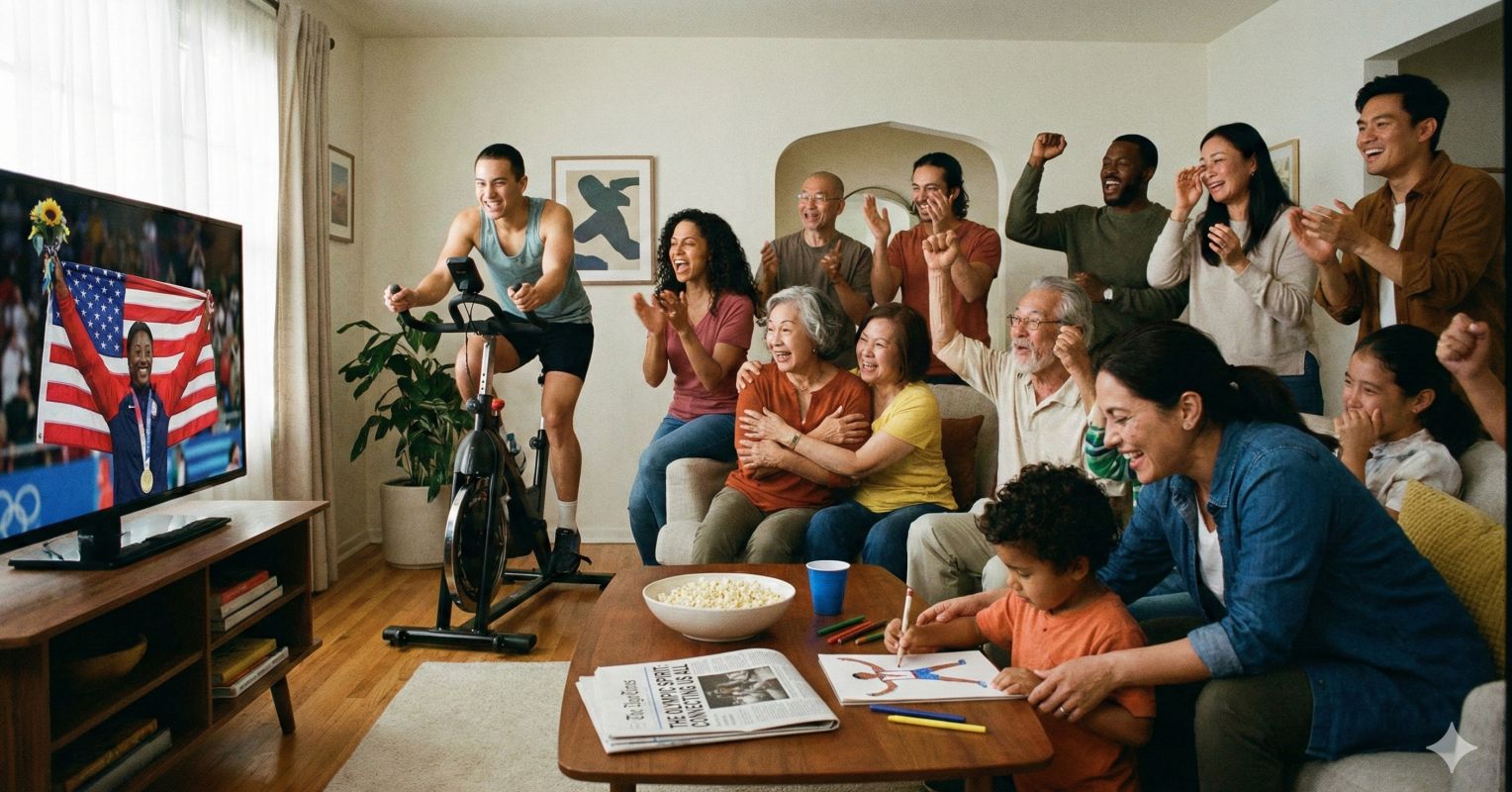
Another powerful reason the Olympics inspire us is that they create a rare sense of shared attention on a massive scale. In daily life, our social world is fragmented. We inhabit different political camps, geographic regions, and cultural spheres. For about two weeks every two years, the Olympics interrupt that pattern. Millions watch the same performances, hold the same breath, celebrate the same triumphs. This collective focus fosters connection and belonging that nourishes us. Humans are social creatures; feeling part of something larger than ourselves supports mental well-being by reducing isolation and reinforcing shared meaning.
The universality of certain human experiences (failure, perseverance, grief, joy) makes Olympic stories especially potent. We recognize in athletes’ journeys reflections of our own struggles and aspirations. Seeing elite performers confront setbacks or injuries reassures us that difficulty isn’t a flaw but part of any meaningful path. That recognition cultivates Self-compassion: We’re less inclined to interpret our own stumbles as personal failures and more likely to view them as essential steps in growth.
We saw these dynamics play out vividly in this year’s Games. Lindsey Vonn’s crash and serious leg fracture could have ended only in bitterness, yet her public reflections emphasized “no regrets” and the acceptance that sometimes dreams end inches from where we hoped. Ilia Malinin’s soaring expectations and painful meltdown on Olympic ice gave viewers a front-row seat to pressure, vulnerability, and the reality that even prodigies can falter. Piper Gilles’ bronze medal in ice dance, achieved after surviving ovarian cancer and grieving the loss of her mother to brain cancer, transformed private suffering into shared beauty and joy. These stories teach empathy, normalize struggle, and offer living templates for how to keep going when life knocks us down.
Neuroscience helps explain why these stories strike so deep. Mirror neuron systems allow us to internally simulate others’ actions and emotions, creating a visceral bridge between their experience and ours. When we see an athlete’s triumph, our brains spark in ways similar to experiencing victory ourselves; when we see their tears, we often feel a corresponding pang. That empathy isn’t a sentimental accident; it’s an evolved capacity for group cohesion and cooperation, exactly what the Olympics celebrate.
The Games also honor slow mastery and discipline in a culture addicted to instant gratification. Athletes reveal that excellence is built in invisible increments, through repetition, patience, and quiet endurance. Witnessing their commitment can recalibrate our own sense of time and effort, renewing faith in gradual progress. For people struggling with motivation, seeing someone devote years to a single routine or race can act as a psychological nudge: it becomes easier to believe that small, consistent actions in our own lives might eventually add up to something meaningful.
Sport and Competition Essential Reads
But mindful viewing keeps that inspiration healthy. Excessive betting can evolve into problematic gambling behaviors; obsessive consumption at the expense of sleep and relationships leads to exhaustion and strained connections. Mindful viewing also means attending to the complexity behind the highlight reels (inequities in funding, access to training, and support structures that shape athletes’ lives). Holding admiration for individual triumphs while recognizing these broader contexts deepens appreciation without simplifying reality, and opens avenues for constructive action: supporting community sports programs, advocating for athlete Mental health resources, or promoting equitable access to training.
The collective ritual of watching the Olympics can be healing in times of global stress. The Games have periodically functioned as a balm when societies face crises, offering a vision of cooperation and excellence that counters despair. That symbolic power isn’t merely sentimental; it can mobilize hope and remind us that human beings are capable of remarkable cooperation and creativity. Especially when public discourse is frayed, the shared experience of cheering for human potential can restore a sense of possibility and mutual regard.
And that brings us to what happens when the flame goes out. The closing ceremony doesn’t have to mark the end of inspiration. The balance, beauty, and teamwork that move us during the Olympics aren’t unique to sports; they’re available in everyday life. The same joy we feel watching speed skaters or ice dancers can reappear when a family problem is solved collaboratively, when colleagues accomplish a shared goal, or when we bring grace and presence to our daily routines. The Games remind us not only of what humans can do, but of how beautiful it is when we move together toward a common good. In the arena of everyday life, courage, resilience, teamwork, and the pursuit of excellence are goals we can all strive toward.