


In Ukraine, school goes on even when nothing feels stable. Lessons restart after nights in shelters, teachers log on from cities under attack, and students join from apartments without windows or from friends’ homes in other countries. The fact that learning continues at all is a testament to the creativity, adaptability, and commitment of educators and students who have spent years navigating extraordinary uncertainty.
Liudmyla Herasymenko
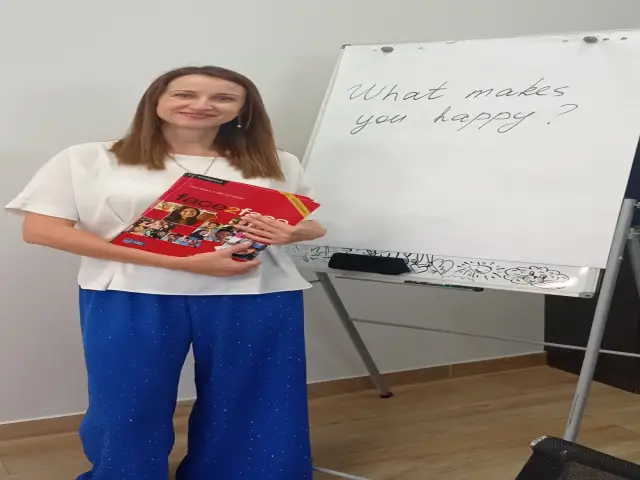
Liudmyla Herasymenko, an associate professor at the Ukrainian State Flight Academy in Kropyvnytskyi, Kirovohrad, Ukraine, is one of the millions of educators carrying the invisible weight of supporting her students’ social and emotional well-being despite the turmoil that surrounds them every day.
“Because of the existing threat, which is hanging, you cannot plan your day in advance,” Herasymenko says. “You can have some plans, but everything can be changed in one second, and you need to adapt to be flexible about it. We have alerts, so that means we need to go to the shelter, then schedules of electricity, which means you need to find power and Wi-Fi. So, it’s a lot of stress that we are experiencing.”
X
Herasymenko is not alone—a rising number of children and educators are currently facing unprecedented disruption and stress due to living in conflict-affected areas. More than 473 million children live in or are fleeing settings of conflict and crisis around the world, and approximately 204 million people worldwide live in areas controlled or contested by armed groups.
Educators in these spaces are navigating burnout, secondary trauma, and constant uncertainty, while they simultaneously hold space for students’ fear, grief, and hope. In these conditions, the question is not whether teachers and students need support, but rather what kinds of support are actually feasible, sustainable, and relevant to them.
Small practices that make the day possible
Despite years of disruption, Ukrainian educators have found creative ways to help students stay connected and engaged. They adapt lesson plans around air raid alerts, maintain routines that foster belonging, and cultivate community across distance and displacement. Social-emotional learning (SEL) practices have become one more tool in that effort, helping educators strengthen the care and support they were already providing.
According to a recent journal article, SEL Kernels—short activities and strategies that are used to support the growth and development of social and emotional skills and competencies—helped support teachers and students in wartime Ukraine. These include games, routines, and activities that target specific skills like emotional regulation, conflict resolution, and building relationships.
When SEL practices are not adjusted to be responsive and relevant to a particular culture, they’re less likely to have benefits. These SEL Kernels, developed by Harvard University’s Ecological Approaches to Social Emotional Learning Laboratory, were modified to fit the evolving needs of educators and teachers in Ukraine. How? Rebecca Bailey and her colleagues started with landscape research to identify what challenges students and educators in Ukraine were actually facing.
“Building on these findings, we engaged in a collaborative co-design process with Ukrainian teachers and a team of LEGO Foundation Ukraine Master Trainers to adapt and refine the Kernels for local relevance and usability,” they write.
They conducted a survey and organized focus groups for teachers to discuss their concerns about student well-being and Mental health. Teachers identified areas where additional support could strengthen the work they were already doing, including helping students regulate emotions during air raid alerts, rebuild social connections, and navigate prolonged uncertainty.
Based on the survey and focus group discussions, the researchers identified five priorities for the Ukraine Kernels materials, including cooperation, mindfulness, cognitive skills, Emotional intelligence, and teacher well-being.
“Finally, we piloted the adapted Kernels materials in diverse classroom settings, gathering data on implementation, feasibility, and relevance,” they write.
After the final revision of materials and rollout of the Kernels, Bailey and her colleagues found that teachers viewed the SEL Kernels as beneficial for both their own and students’ well-being. Teachers reported that the activities helped support emotional and psychological health, made learning more engaging and meaningful for children, and provided practical tools that eased the demands of teaching.
For example, Herasymenko has found that short mindful moments help ground both her and her students. Having students name their rose, thorn, and bud for the day—having them reflect on something positive, naming a challenge, and looking ahead to something they’re excited for—have helped them hold on to hope.
Additionally, she leads a five senses grounding practice with students to reconnect the mind and body without taking up a large amount of time during the learning day. In high-stress environments, practices like these work because they are small enough to hold, even on hard days.
“I cannot imagine my teaching being the same as it was before the war,” Herasymenko says. “Everything is different now. So, I prioritize my students’ well-being more than their academic achievements. I think that now it’s more important for them to be OK and to be without stress in my classes. This is my priority now.”
The impact of Ukrainian conflict in neighboring countries
Data from the Internal Displacement Monitoring Centre show that internal displacements—people who have been forced to flee or leave their homeland to avoid the effects of armed conflict, violence, or violations of human rights—increased from 20 million in 2024 to 32 million in 2025.
Schools in Poland have been significantly shaped by the conflict in Ukraine, and many educators are experiencing new emotional and practical challenges while supporting students. Małgorzata Lidacka, an educator in Kraków who works with displaced Ukrainian students ages seven to 10, has had to approach teaching in a much different way to help her students acclimate to the new environment—often slowing down and reminding herself not to rush to solutions while navigating both lesson plans and emotional responsibilities.
“When you’re a subject teacher, no one tells you that you will then have to be a coach, or some kind of therapist,” Lidacka says. “You can make a mistake and then it can influence these kids. So I feel this burden that it’s a lot for one person to combine those roles.”
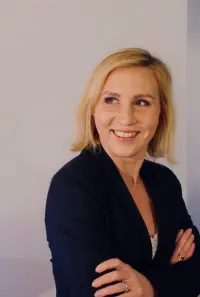
Małgorzata Lidacka
The cultural barriers have also made it difficult for her to connect with parents, and some students have fallen behind because they refused to learn Polish when they first arrived, thinking that the stay in a new country would have been over much faster. The anger, fear, and hopelessness that her students are experiencing make it increasingly difficult to focus on academics, and Lidacka empathizes.
To support herself and her students while carrying this increased mental load, Lidacka turned to social-emotional learning strategies. She now routinely advocates for play to promote shared joy beyond language barriers and encourages small acts of kindness—like lending a pencil or a book to a classmate. Additionally, when working with parents, she began asking open-ended questions and practicing mindful listening, which she found made a huge difference in connecting and finding common ground.
“During the workshops with parents, I just listen,” Lidacka says. “And they are creating such great ideas about the future—for them and for their families.”
Despite the challenges Lidacka has faced with her students, she has also seen how remarkably adaptable they are. Many have learned to transition between online and in-person learning at a moment’s notice, they support classmates navigating similar disruptions, and most really dove headfirst into learning the new language and culture.
“The best part is small acts of kindness on a daily basis, and also a huge determination from Ukrainian kids to learn Polish,” Lidacka says. “They really wanted to learn very fast. And we have some pupils in the first grade that are fluent in Polish, even though their parents aren’t. So I’m like, ‘Wow, that’s amazing.’ Of course, it was a requirement, but not everyone succeeds.”
Supporting the supporters: Teacher well-being in real time
While searching for additional support and resources for her classroom and her own well-being, Lidacka found the Greater Good Educators Community of Practice (CoP). The CoP offered a space for educators across the globe to connect with one another and learn science-based practices focused on purpose, awe, Self-compassion, gratitude, and kindness and compassion for others.
For educators like Lidacka, who had already experimented with small, bite-sized SEL practices, the Greater Good Educators CoP created a space to expand on what she already knew. The practices emphasized that teacher sustainability begins with teacher well-being, and the community conversations helped her see she was not alone.
“After these three years, I see among my peers that we are exhausted,” Lidacka says. “More and more often, we are searching for places to debrief or to just sit and talk about how difficult it still is to manage this.”
Alongside learning SEL practices like mindful listening and Self-compassion-for-adults/” title=””>Self-compassion, the educators who joined the CoP were encouraged to practice the shared community invitations of curiosity, compassion, and respect with each other. These invitations helped create a supportive environment where teachers could connect across experiences and process challenges together.
Herasymenko is one of the many educators Lidacka was able to virtually connect with, and she shared similar sentiments about the importance of having an outlet to support her own mental well-being.
“It’s great to have some kind of community of teachers during all these hardships,” Herasymenko says. “Before the war, I didn’t pay so much attention to my well-being, and now I understand that this is an important part of a teacher’s job. To think about taking breaks, to think about how to recharge yourself.”
Educators like Lidacka and Herasymenko are not waiting for ideal conditions to create caring learning environments. They have continued teaching, adapting, and building community through years of uncertainty. SEL initiatives are not a one-size-fits-all cure for the challenges they face, but they offer additional support for work they are already doing. By investing in educators’ well-being, we help sustain the people who make learning, connection, and hope possible—even in the most difficult circumstances.