




Imagine you have a colleague who remembers that you had a difficult appointment and checks in on you. Or a friend who is just there to listen without telling you what you should have done differently. We don’t tend to think of these experiences as grand declarations of love, but they leave us with a certain lingering warmth: the feeling of being loved.
In our research, we coined the term felt love to focus on the receiver’s side of love. This emphasis shifts attention away from the expressions of love (i.e., loving signals). While expressions are actions we choose to take, felt love is an internal, subjective sensation that washes over us. However, how strongly it does so also depends on us: The same act of care may pass unnoticed or land as love, based on the receiver’s cognitive beliefs or state of mind. Many experiences may elicit felt love, and they occur not only in romantic settings, but when we share time with friends, receive supportive gestures from family, or even get unexpected help from strangers. We are only just beginning to uncover how people come to feel loved and whether that experience can be changed—if it can be learned, like a skill.
In our research on shared beliefs about love, we asked 495 people representative of the U.S. population to judge situations that would make most people feel loved. What they ranked most love-eliciting was being shown compassion in difficult times—an act that, in principle, any person could (and should) offer. Pets feeling happy to see them ranked highly for eliciting the feeling of being loved. Clearly, love, as people live it day to day, reaches past courtship and partnership.
X
Work like this partly drives how we measure who feels loved and when. It is common for studies to measure the experience of love as if it were a stable trait—for example, romantic attachment as a demographic indicator—but this practice obscures fundamental aspects of the lived human story. Relationship status may describe part of someone’s circumstances, but it does not tell us whether that person feels loved in their daily experience. For example, many people experience love while unattached, and many do not experience love despite being in a long-term relationship. In fact, in our studies, strong experiences of felt love are reported by participants who identify as unattached. To study felt love, we also have to ask about the experience directly.
Tracking felt love in real time in real life
Subjective states like felt love are inherently volatile, so studying it requires many careful observations, ideally while people are going about their daily lives. We often rely on complex research methods that focus not only on how people feel at a given time, but on the patterns of change over time and how those are shaped by our environment and affected by others.
Our basic approach is simple in principle: Ask people how loved they feel at different times while they go about their lives. In two studies published in 2020, in which over 200 participants reported their felt love states a handful of times per day for several weeks, we found that people with higher levels of felt love also tended to report greater flourishing and emotional well-being.
Frequent, repeated observations also allow us to disentangle a person’s typical experience from day-to-day fluctuations. This can also reveal individual differences in how persistent daily felt love states are—a feeling can be strong and brief, or weaker but sustained. Persistence is not automatically desirable: A below-usual feeling of being loved can persist, too. Whether particular patterns directly affect well-being remains an important open question.
To study the role of persistence, we developed custom mathematical models that include love inertia—that is, how long that warm feeling stays with us. In our recently published study, 52 participants reported how loved they felt as well as how much love they had expressed over a period of 28 days. We found that people whose felt love states were more persistent also enjoyed better Mental health and indicators of well-being. Even more interestingly, the more people expressed love to others in their daily lives, the more they themselves tended to feel loved in return. Expressing love appears to be a gift that keeps on giving: Showing love is associated with a lasting sense of warmth and better well-being, and it also spreads love around you.
This finding suggests an actionable insight: Expressing love could be one route to feeling loved. If you are feeling a lack of connection, proactively expressing selfless care for someone else might help jumpstart your own feelings of being loved. We don’t yet know what accounts for this association. Expressing love might invite a warm response, change how you interpret a relationship, or be part of an interaction that lifts both people up.
Can we learn to feel more loved?
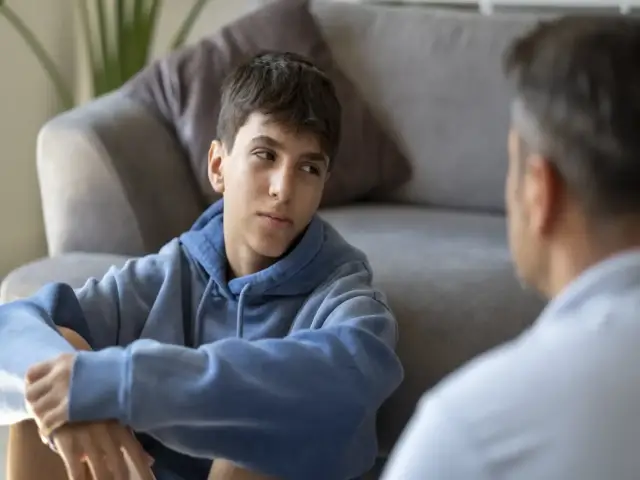
Can an interaction actually change how loved someone feels? A 2024 study with 218 parent–child pairs argues just that. The authors of that study randomly assigned parents and their children, aged eight to 13, to one of two nine-minute conversations. In one condition, they took turns answering questions that encouraged personal disclosure (for example, instead of a surface-level question like “How was school?,” they might ask, “What is something you worry about?”). In the other condition, they made small talk. Children in the disclosure condition reported feeling more loved during the conversation.
This result cannot readily be explained by children in warmer families simply choosing more personal conversations—assignment of children to conditions was random. The researchers changed the conversation and observed a direct difference in the children’s experience.
Such findings need to be independently replicated for reliability and generalizability, but this is an important and promising step: A straightforward intervention changed an experience of feeling loved. The next question we can work on is whether changes of this kind can become part of daily life.
Our focus on the receiver side of love brings a slightly more complex perspective: that an act does not produce a loving feeling by itself, but that effect is moderated by interpretation and expectation—thoughts that come to us in the moment, cognitive beliefs that support those thoughts, and the justifications we have for those beliefs. A colleague’s quiet help can be experienced as love, or dismissed as routine professional courtesy.
An area that is not yet well-explored is how the reception of expressions of love can be taught. If feelings follow perceptions, and perceptions follow beliefs, then felt love is a cognitive phenomenon in addition to an emotional one, so that cognitive skills contribute to how we experience the social world. It may be possible for people to learn to notice when they reflexively dismiss acts of care, to check their interpretation against what actually happened, and to re-evaluate in order to let the sender’s kindness count. It is also possible that a deficit in this cognitive skill prohibits many people from benefiting from the ambient love that is already present in everyday life. Even so, biased perceptions can have positive effects in this context. People with a stronger general tendency to interpret daily life experiences as expressions of love feel more loved in general, with all the well-being benefits that brings.
Where the science goes from here
We now have ways to measure felt love in daily life, evidence linking it to well-being, and at least one experiment that changed it in the moment. A sensible next step is to connect those findings.
Can an intervention change daily feelings of love for weeks or months? Does that change lead to better well-being? Does it work for people who start out feeling relatively unloved, or mainly for those already doing well? Those are different questions, all embedded in the vastly complex network of our daily environments and experiences—part of what is sometimes called the exposome—and they require different, carefully drawn comparisons.
Future trials could focus on the cognitive component of felt love—whether an underlying ability to appreciate acts of love extends to other facets of life, and whether interventions should target the individual’s reasoning before focusing on their social context. Repeated measurements in daily-life settings could be used to show whether any differences generated by the intervention survive after the study session. Such trials would need to be designed with a great deal of care to establish the mechanisms of causality—a standard challenge of daily-life social psychology studies, but an especially critical one here. Establishing how to make experiences of felt love more available is an expansive but worthwhile scientific endeavor.
Finally, an emerging focus on love also recognizes how it is culturally and contextually bound. While certain loving gestures are found all over the world (such as helping someone in need, or empathic attention), to foster intercultural understanding, empathy, and inclusivity in diverse societies, it is vital to recognize love’s cultural variations in everyday life. We are currently conducting global cross-cultural research to identify specific ways love is shown in everyday life across different types of relationships, beyond just the romantic.
Do try this at home
While we and other researchers continue to conduct larger studies to unpack these exact mechanisms, we don’t have to wait for the data to start paying closer attention to the quiet moments in our own lives. What happens when you feel genuinely cared for? What happens when you proactively express love to someone else? Being mindful of how they respond can reveal something that checking a box to count affectionate gestures misses. Fostering these experiences doesn’t require a laboratory—it is a daily practice we can all begin right now. Showing love is a low-cost experiment we can all conduct in our own daily lives.