



Backpack-and-pencil time is just about here, but it’s not too late to treat yourself to a healthy dose of summer joy.
There’s no need to feel bad about stretching that vacation feeling out as long as you can. These eight mini-vacations for the mind and spirit require no suitcases to pack (and unpack), no expensive gas tanks to fill, and no big credit card bills to pay. Not only are many of our favorite summery luxuries simple and inexpensive, research suggests they just might be good for us, too. Before you swap the flip-flops and tanks for boots and sweaters, take a moment to seize some feel-good fun.
Catch a concert
You don’t need expensive tickets to the hottest concerts of the summer to reap the happy rewards of listening to live music. “Collective effervescence”—the feeling of meaning and closeness with others that we experience in a positive group activity—is key to a concert’s feel-good benefits, researchers say. While listening to songs at home is fun, too, the “sacredness and connection” of collective effervescence is rooted in the togetherness of a crowd at a concert, and the uplift can continue for as long as a week after.
Free and cheap local live music options abound in many areas, whether it’s an old-time swing band in the gazebo in the park, a vocalist on the patio at a nearby café, or a full orchestra playing to a grassy outdoor amphitheater. Bring a blanket, let the kids run if you’ve got any, and soak in that sweet collective effervescence.
Set your sights on water—or even jump in
X
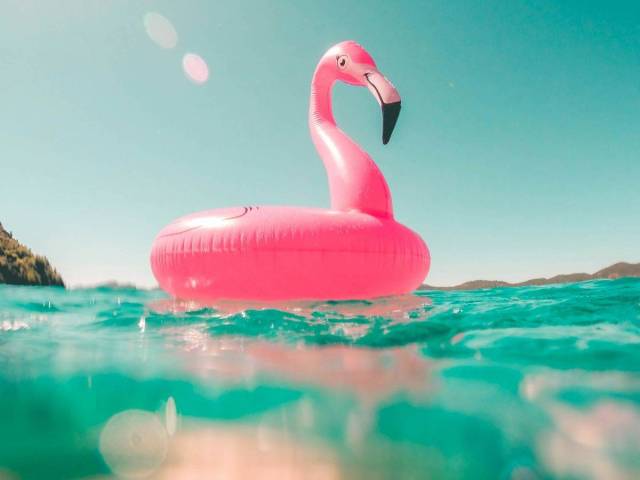
A beach or lake vacation may not be in the plans this summer, but you can still treat yourself to a walk next to a stream or a paddle in a nearby pond.
Research finds that people who regularly spend time in natural environments like parks, woods, and beaches tend to have better physical and psychological health, and water offers specific benefits to well-being. According to new research from 19 countries, water-centric “blue spaces” like rivers, lakes, and oceans bring us feelings of restoration, calm, and greater mental and emotional energy. Being near water is itself beneficial, but swimming or even wading boosts the restorative effects.
My own summer favorites are regular evening walks around a small local lake and—if I can make it work—getting out on a stand-up paddle board at least once a summer. Happiness!
Look up at the night sky
Research on the benefits of nature has generally focused on daytime hours, but that’s beginning to change. Researchers have created a “night sky connected index” (NSCI) to measure the effects of outdoor time at night, especially looking up at the sky, and they found that people with a higher NSCI tend to have “greater mental well-being and happiness.” Looking at the night sky is also linked to feelings of awe, according to the same study, and experiencing awe can help reduce negative thinking and boost our happiness.
August is Perseids meteor shower time: Every year, across the Northern Hemisphere, thousands of meteors may be visible as they streak across the night sky. As a child, my siblings and I would often sleep in the backyard in mid-August and happily count meteors while we lay on our backs in our sleeping bags. My backyard sleeping days are behind me, but I admit that lately adulthood has been so busy that I haven’t even looked up at night. Time to find the magic again.
Enjoy a meal with others—outdoors
No matter what outdoor activity you choose, getting outside in green space specifically (even parks and street greenery count!) is beneficial. But you can boost your outdoor fun—and health—even more by inviting others to share a meal together. Recent research finds that eating with others makes people feel more happiness and less stress, pain, and sadness that day compared to days when they only eat alone.
You don’t have to host a dinner party or spring for an expensive restaurant meal. Greater Good reader Catherine Michaud shared her simple, satisfying summer recipe with us: “Find a local park with good shade trees. Bring a book, a blanket, a friend (or three), lawn chairs, picnic, and board/lawn games.” Count us in.
Put up your feet while your kid climbs a tree
Speaking of kids: As a kid of the 80s, I climbed countless trees with friends and siblings. But I am having trouble remembering a time when my own kids clambered up branches just to see how high they could go.
A recent Australian paper reviewed many studies about adventurous play and “overwhelmingly” concluded that children engaging in risky outdoor play showed better overall Mental health and social abilities and were less prone to anxiety. “Risky outdoor play” generally includes activities involving high speeds or heights, play with dangerous tools (saws, knives) or near dangerous elements (fire, water, cliffs), rough-and-tumble play, and activities in which the child could “disappear” out of adult sight. This list may make some of us (including me) a little nervous, but maybe we could at least let the kids help build, light, and tend the fire for some late summer s’mores?
The authors of the study specifically caution against helicopter parenting; it’s key, they say, that the kids learn to evaluate risks themselves. This isn’t a permission slip for parents to neglect safety, but it is a reminder that this summer it’s OK for parents to turn down the worry-meter, skip the hovering, and instead sit on the patio with a book or a friend while the kids take in a joyful climb or a bike race down the driveway.
Watch sports for the win
This year’s World Cup excitement is over, but the sporting fun doesn’t need to end: People who watch sports, either live or on TV, tend to show a number of health benefits.
A new study published in the journal Nature found that watching live sports reduces the stress hormone cortisol and increases the social-bonding hormone oxytocin. So, whether it’s an evening of Little League or the Big Leagues, and whether you’re in the middle of a cheering crowd or cozied up on the couch during a thunderstorm, take a break from the end-of-summer rush and relax into a game, win or lose.
Apple-pick your way to less stress
Greater Good reader and mom Aja Russo loves taking her kids strawberry picking every year in early summer. But if you missed strawberry picking time, and you didn’t plant a garden this year (raising my own hand), it’s not too late. Start reaping the benefits of gardening at a pick-your-own farm. Research finds that even short periods of gardening can lead to feeling calmer and more relaxed.
What to pick? Peach picking is still going strong in many areas, and apples aren’t just for autumn—popular varieties are ready for picking in August in much of the United States. If the climate where you live doesn’t cooperate with picking fruit right now, you can still exercise your green thumb and boost well-being by tending a plant indoors.
Indulge in ice cream
Yes, we said what we said. Most of us intuitively know that eating ice cream makes us feel good, but researchers were surprised when decades of observation found a lower rate of cardiovascular disease among diabetic people who ate a small amount (about half a cup) of ice cream a few times a week compared to diabetic people who never ate ice cream.
Now, scientists caution that this doesn’t mean that ice cream is a health food, but it certainly suggests that we don’t need to heap a topping of guilt onto our occasional cool treats. There’s still plenty of summertime left for a sunset trip to the local ice cream parlor with friends or family. Yum!
If you live in a place where the autumn chill will soon set in, now is prime time to revel in long evenings, soft temperatures, and as much summer well-being as you can seize. As the famous song goes, “Summertime, and the living is easy.” And healthy!