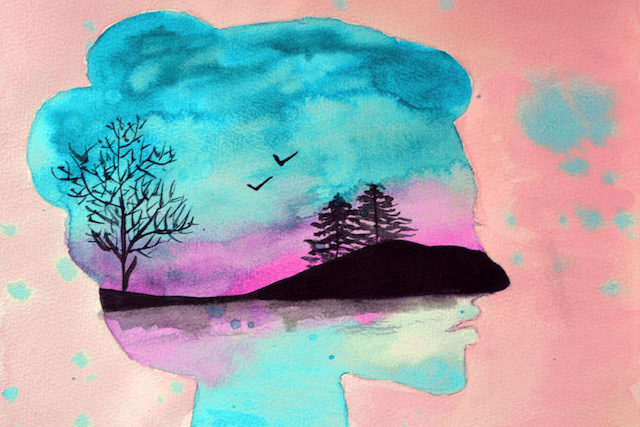





Do you feel smarter, yet find it difficult to carry on a simple conversation with your contemporaries? Do you feel bored too quickly because your mind is racing a thousand miles an hour? How about finding it difficult to make a personal decision without consulting artificial intelligence for help? I think it’s time to locate the pause button and reset it for the sake of balance. Sometimes, taking a trip to a quiet place to regroup would help.
I made an out-of-state hotel reservation for a business trip, flying red-eye and arriving at the hotel by 6:20 a.m. I was keenly aware when I made the reservation that the hotel’s check-in time was 4:00 p.m. Interestingly, two days before my arrival date, the hotel front desk associate called me to confirm my visit and to check on whether I needed anything else before my arrival. I assured him that everything was okay.
On second thought, I decided to ask him if he could consider allowing me to check in earlier than 4:00 p.m. At first, he said there was no availability for early check-in. However, as we started talking about the purpose of my coming to their city as an invited guest of a prestigious university, my love for their ocean views, and how the hospitality of the natives makes a world of difference, he decided to reassign my room to the third floor and allowed me to check in for my 6:20 a.m. arrival. I was quite appreciative. Then I began to wonder what led to his change of mind. I guess the answer is best known to him.
His beneficial change of mind made me think about the importance of human judgment versus a possible artificial intelligence response to my request. If it were left to AI to make the decision for an early check-in, it may not have considered my request, because AI only operates within the confines of its programming. While AI has its shortfalls, human judgment has flaws as well. This dichotomy is keeping social scientists up at night as they try to figure out how to balance AI capability with human need.
One helpful example is in the package delivery business. Package delivery devices help delivery drivers map out their entire routes, down to which side of the building they should park on for a delivery. However, AI cannot create the human connection necessary to increase customer service or relations. Sometimes, upon arriving at the customer’s location, a driver may realize that the customer is emotional because she has been told that she’s to be laid off tomorrow. The single mother customer is now worried about her two little children, rent, and her own future flashing in front of her. At that moment, the driver’s next response to his worried customer has to be humane, compassionate, and immediate. AI can be efficient technologically, but human emotion has its place and has to be experienced either in words or in the pages of a book.
Recently, some authors have used AI to write their entire manuscripts, yet when published, the book may lack the emotional component that connects readers to stories. It is evident that while AI has revolutionized how people carry out their everyday lives, human judgment can never be underestimated.
Here are three tips to consider before overly relying on either human judgment or AI.
1. Find out what work needs to be done.
Knowing the objective of a project is critical because it is what determines whether the assignment should go to humans or AI, or both. In the example of the hotel front desk associate allowing me to check in early, the way I was treated made me feel good and eager to use their service again and even refer my friends and family to the hotel. In this instance, the human connection and treatment were important to me. In this context, the hotel front desk associate understood how important letting me check in early was to me, and he used his judgment to accommodate my request. Essentially, knowing the end result before making the final decision could make a difference.
2. Find the imaginary line.
With the competing values between human judgment and AI, or between speed and sanity, striking a balance is becoming more like a personal quest. Like the saying, “Too much of anything is bad.” Deciding when to “hold, fold, or walk away” seems like the healthy balance to look for.
In my example, if sticking with the hotel policy would make someone like me a one-time customer, then the policy has failed to gain a potential repeat customer. Weighing each situation carefully by applying human judgment where necessary could help accommodate human needs. After all, AI was made for human consumption; therefore, human satisfaction should be a priority. Knowing where and when not to compromise still requires human judgment and is important because it is all about serving humanity.
Artificial Intelligence Essential Reads
3. Emphasize the human connection.
Healthy human connections can never be overemphasized. Humans are social creatures. That is why you long for connection. With this known fact, if your attention span is assaulted by different kinds of noise in the world, then your Mental health and overall well-being are at stake. It will make sense to engage in more outdoor activities, such as taking a walk or jogging. Also, it is important to visit friends and family, especially during special occasions like graduations, weddings, baby showers, funerals, and hospital visits. Hibernating in the virtual reality world is no substitute for having healthy conversations with your neighbors, people at the grocery store, in the neighborhood park, at your place of work, or at your worship center.
Both AI and people can have a place in how you conduct yourself on a daily basis. Allowing one to rule what you do could cause you to be out of balance. While it is necessary to make life easier with technological advancements, certain lessons take time. The wisdom of the ages did not come about with the flip of a switch.
It takes time to raise a child; therefore, expediting child-rearing may not be beneficial, as it requires human judgment at every step. On the other hand, using AI to perform certain heart-related procedures may avoid traditional open-heart surgery, simply because sophisticated AI has been designed for quick procedures and recovery. Finding a balance, rather than choosing all-AI or no-AI, would do humanity good. Use your best judgment to marry AI and humans for your own mental and psychological well-being.