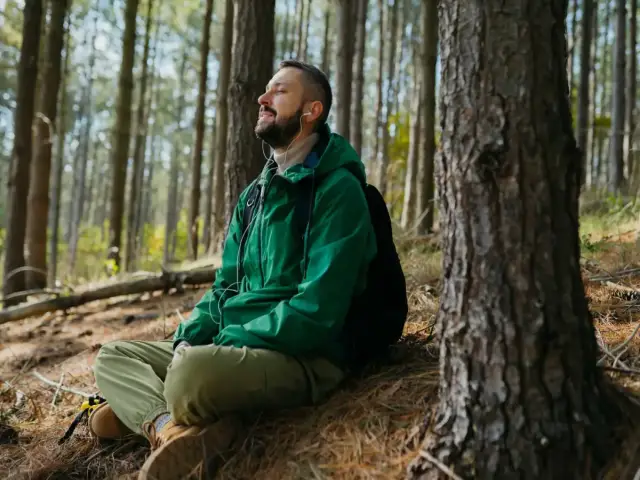





Raising a teen is one of the last chapters in parenting. During these years, it’s easy to prioritize your child’s grades, sports, and other accolades, especially as they inch toward leaving the nest.
While achievement is one marker of success, there’s another (often overlooked) skill that shapes your teen’s well-being and development: emotional maturity.
According to clinical psychologist Lindsay Gibson, emotional maturity develops through deep emotional connections, beginning with a child’s parents and primary caretakers. Research shows emotional maturity is the ability to accept and express care, temper big feelings, and make wise choices. Without it, teens are more likely to feel lonely and less satisfied with life, one study found.
X

In her latest book, How to Raise an Emotionally Mature Child, Gibson points out that “the quality of humanity’s future depends on the emotional maturity of coming generations.”
Juli Fraga: In your book, you mention that humanity’s future will depend on emotional maturity. Why does this matter so much right now?
Lindsay Gibson: Emotional maturity is critical to our well-being as individuals and to the smooth, productive, and innovative aspects of society. When you’re emotionally mature, you can think and anticipate consequences. You can also look back and learn from what you’ve done before. So, you can rely on your thinking to help you deal with reality. Emotional maturity also means tuning into your inner world, including your emotions, imagination, hopes, dreams, connections to other people, and sense of belonging.
JF: Our society places a lot of emphasis on achievement, and less importance on Emotional intelligence. How can parents help their teens balance the two?
LG: There’s a real cultural pull in society to prize intelligence and achievement. But when parents get too fixated on these qualities, a child may feel like performance matters more than their thoughts, feelings, and sense of safety.
Kids need to be safely held and supported through the growing-up process. It helps them feel resilient, secure, and confident—qualities they need to take out into the world to function independently. If you get too fixated on the intelligence and achievement parts, you’ve got someone who’s very powerful in one area, but whose emotional side may be underdeveloped. It’s the balance between the two that matters.
JF: In your book, you mention why it’s so important for parents to help their kids develop a sense of self. Can you explain why this matters, especially during the teen years when kids are individuating?
LG: One way teens find out who they are is by discovering who they’re not. Teens might push a limit or break a rule, and it’s all par for the course. What’s important for parents is to be able to recognize and imagine that their child has a separate heart and mind from theirs—a process called “mentalization.”
A self is that inner spark that speaks to us. It says “don’t do that” or “now’s the time to go for it.” It guides you toward what’s most compatible with your individuality and who you are meant to be.
Our sense of self comes from our relationships with people we love and who love us. To feel secure, kids need solid, dependable, connected, and deeply resonant relationships with their parents and caretakers. They need parents who are curious and reflect something back that’s meaningful about who the young person is. When they have that foundation, they have a sense of being a real person inside.
JF: Parents are so busy these days, and overloaded—mentally and emotionally. Raising emotionally mature kids may feel like another big to-do on an already long list. What advice do you have?
LG: Taking time to pause and take your child seriously as a real person will work wonders for their self-confidence and future resilience.
Slowing down takes practice because by the time you’re old enough to have a family, you’ve probably been very goal-directed; parents can be pretty hard on themselves because our culture is so fixated on achievement.
But pulling yourself away from your goal for even a second to tend to your child is something worth practicing because that’s what children’s needs are all about. Kids also develop confidence when they know they matter just as much as anybody else.
JF: What are some behaviors that are normal for teens but that parents might misinterpret as pushback or misbehavior?

How to Raise an Emotionally Mature Child (Crown, 2026, 352 pages)
LG: Sometimes teens experiment with saying or doing things that clash with their socialization up to that point, such as the language they use or the clothes they wear. These are things that the parent can feel like, “Whoa, I’m uncomfortable with this…”
Here are two meaningful ways to navigate these moments.
Ask your teen questions about what they’re into, such as the styles they like or what they admire about someone they idolize. Try showing interest, not intrusive interest, but just interest in what they like, or why they are experimenting with different things.
Keep in mind that when your teen snaps at you, is in a bad mood, or slams the door, their emotional centers are activated in a way that will probably never be repeated in their life because their brains prioritize emotional development first during this stage.
JF: Can you share more about why a teen’s development follows this trajectory?
LG: Yeah, I know it’s easy to ask, “Why in the world would nature do it that way?” It’s because that’s how important the emotional self and relationships are to our real success as independent adults.
As adults, we have to know ourselves inside and out and use our feelings to guide us. Teens are still trying to work this out. Learning how to handle these emotions takes a lot of practice. They’re finding out what it’s like to feel rage, or what it’s like to be in love, or to feel disappointed. And they’re feeling them in the most intense way they ever will, because the brain is taking on the job of developing them into a really deep, complete human being.
JF: What advice do you have for parents when their teen’s emotions push their own buttons?
LG: Keep in mind that when your teen responds in an adamant, emotional, defiant way, or calls you names, they’re not really in command of those emotions yet.
Instead of coming down hard with words that suggest they’re not a good person, try to respond with: “I’m really interested in how you feel about this. I want to hear your arguments, but when you call me a name, it makes it impossible for me to be available to you. It just doesn’t work. We don’t call each other names in this family. That won’t work when you’re an adult, either.”
The interaction then becomes an education about how people respond to different kinds of approaches. Harshness that stops a teen cold shuts down their impulse to communicate their feelings to other people, which isn’t good for resilience or honest relationships.
JF: What are two things that parents do to foster emotional maturity that can actually backfire?
LG: One is the importance of achievement, of having a good resume. Of course, parents know how hard life is as an adult. We feel it’s our duty to convey these realizations to our kids. But when it becomes something that feels like everything else will fall into place if you do these things first or achieve X, we are not helping our kids with the emotional or interpersonal side of life. We’re creating a one-dimensional kind of person.
Sometimes parents also think that if they don’t give their child severe consequences or punishments, the child won’t learn and mature. When you try to convey information through punishment, you actually teach a child to defer to other people’s anger and control. Of course, we want them to be aware of consequences, but sometimes we can go too far. You can’t have a full, right life if you’re always anticipating that somebody might be mad at you.